

Research_AdobeStock_©-Gorodenkoff_201606406_2000px_191205

Research

ailslab: Artificial Intelligence in the Life Sciences

251121A_BIH_Logo_CMYK_BIH_Logo_Standard_BlauKorall
ChariteUMB-Logo_RGB_600px_191023

ailslab Overview

Berlin

The ailslab focuses on innovative methods from the wider field of artificial intelligence for pioneering digital health applications. Roland Eils has assembled a small but highly innovative team of students and scientists that are venturing into different aspects of digital health. At the heart of this lab is the integration of huge and deep datasets from both healthcare and research for tackling pressing issues in health and disease. Our ambition is to concurrently deepen our understanding of disease mechanisms and to improve diagnosis and treatment of cardiovascular and cancer patients.

Topics

Cardiovascular risk modelling  

In this project, we work towards an improved prevention and treatment of patients with established coronary heart disease (CHD). CHD is a major cause of morbidity and mortality. The risk landscape in patients with coronary disease is highly heterogenous, depending on their genetic background, clinical characteristics, cardiovascular risk factors and atherosclerotic disease status. With the availability of effective, but costly novel treatment options (such as PCSK9-inhibitors), there is great need for advanced cardiovascular risk prediction tools to stratify the use of novel treatments, support personalised monitoring windows and increase the efficiency of clinical trial designs by allowing for the selection of individuals at high risk of recurrent events. Here, we aim to improve and personalise prevention and treatment of established coronary heart disease by developing data-driven, neural-network based tools for risk modelling and multi-modal data integration. We investigate representation learning techniques to identify latent factors across data modalities associated with risk and examine lifetime risk more closely.  The clinical environment at Charité in synergy with data-collection and patient management platforms allows for a prospective validation and clinical integration of our technologies. 

Omni-genetic phenotype models

Genetic contributions to many health-related phenotypes like blood pressure and body mass index often arise from complex interactions between multiple genes. Thus, an understanding of how variants of different genes interact, is of great interest. We plan to make use of recent advances in the field of explainable machine learning to analyse data from large cohort studies. Starting with variants of individual genes, we want to predict how they influence the activity of the systems they are involved in, for example DNA repair. Based on these predictions, we want to predict the activity of more complex systems and repeat this process until the information of all genes is combined in one system describing the effect of all variants. At that point, the information on thousands of genes will be available in a very compressed representation, which will be the basis to predict phenotypes like blood pressure.  

Additionally, this approach can be used to predict which cellular systems are affected by a given set of variants resulting in a specific phenotype. For example, for an individual with increased blood pressure and variants in multiple genes, this could be used to predict, whether the DNA repair system is involved in the increased blood pressure. Information like this can be used to check if the model makes its predictions in an intuitive way and can also be the starting point of new research, if strong connections are found. 

Open medical data 

Machine learning methods hold the promise of great benefits for patients, physicians and researchers but require vast amounts of data. While this data typically exists in large research hospitals, it is generally inaccessible due to legal, ethical and privacy concerns. By building a secure computing framework, following the model-to-data approach, we aim at opening medical data for research purposes. 

The core idea is that the sensitive data stays within the hospital’s servers, pseudonymised and protected by existing safeguards. Researchers will work with the data by sending in containerized models, which will then be optimized on the data using on-site high-performance computing resources. While metrics are generally sent back to the researchers, models will only be sent back after thorough privacy checks.  

In this framework, the hosting hospital stays in full control over their (patient) data and does not disclose personalised or otherwise sensitive data to researchers while still enabling research for a wide scientific community. 

Roland Eils HiDiH Hub for Innovations in Digital Health

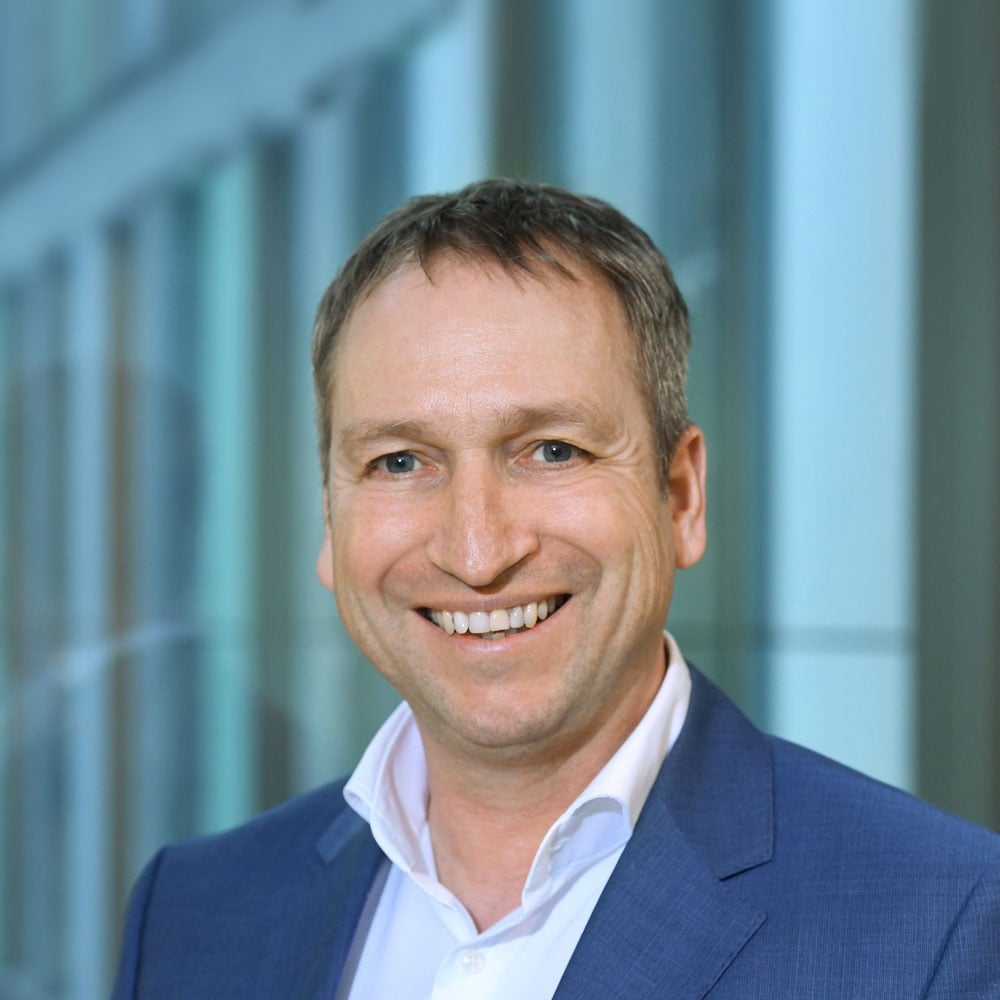
Roland Eils is the founding director of the Center of Digital Health at Berlin Institute of Health (Charité, Berlin) and the Health Data Science unit at the Medical Faculty of Heidelberg University. Before, he was founding and managing director of Heidelberg University’s Systems Biology Center BioQuant and coordinator of the cancer genomics program at the German Cancer Research Center. His group has delivered significant contributions to the field of systems biology and cancer genomics and is pioneering the field of digital health in research and care. 

Prof. Dr. Roland Eils

Founding Director of the BIH@Charité - Center of Digital Health

BIH@Charité  -  Center of Digital Health
Luisenstr. 65
10117 Berlin

Benjamin Wild

Benjamin Wild obtained his M.Sc. in Computer Science at Freie Universität Berlin and received his Ph.D. from the Dahlem Center for Machine Learning and Robotics under Prof. Tim Landgraf. In 2021, he joined the Berlin Institute of Health at Charité, where his group develops state-of-the-art machine learning approaches to solve fundamental problems in healthcare. His research leverages foundation models and diverse data modalities, from multi-omics to medical history, to advance AI-driven risk stratification and primary prevention.

Benjamin Wild

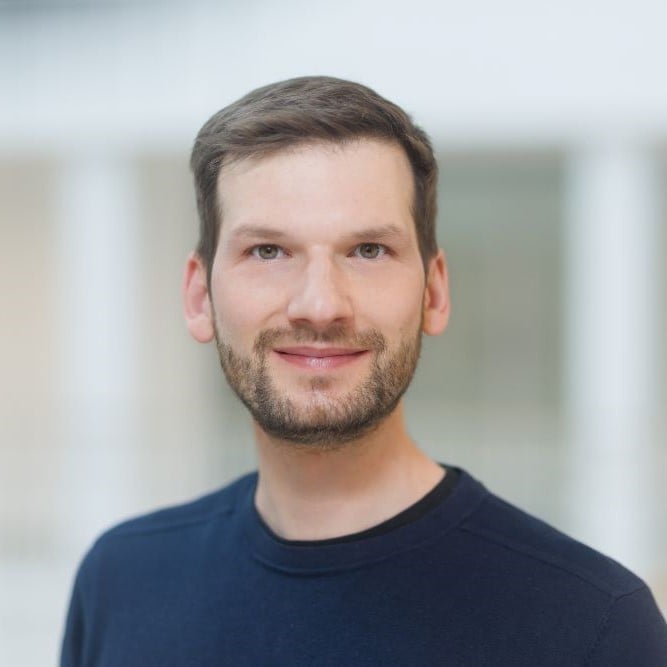
Group Leader ailslab

BIH@Charité  -  Center of Digital Health
Luisenstr. 65
10117 Berlin
 

Research Group

Leylanur Bodur
PhD student
leylanur.bodur@bih-charite.de
Minh Duc Do
research assistant
minh-duc.do@bih-charite.de
Qihao Duan
PhD student
qihao.duan@bih-charite.de
Leonhard Eckhoff
student research assistant
leonhard.eckhoff@charite.de
Noel Kronenberg
student research assistant
noel.kronenberg@charite.de
Johannes Kraume
medical doctoral student
johannes.kraume@charite.de
Tillmann Rheude
PhD student
tillmann.rheude@bih-charite.de
Julius Upmeier Zu Belzen
PhD student
julius.upmeier@bih-charite.de
research assistant
PhD Student
georg.von-arnim@bih-charite.de

Publications


Latest News

SBHD 2026

Our colleagues from Northestern University in Boston are organising the 18th INTERNATIONAL CONFERENCE ON SYSTEMS BIOLOGY OF HUMAN DISEASE – SBHD 2026 in Boston from June 08-10. This years Conference
Development of the European Cancer Information Portal Launched

The Berlin Institute of Health at Charité (BIH) coordinates the pan-European research initiative "EU-CiP" (European Cancer Information Portal). Supported by 12 million euros from the EU’s Horizon
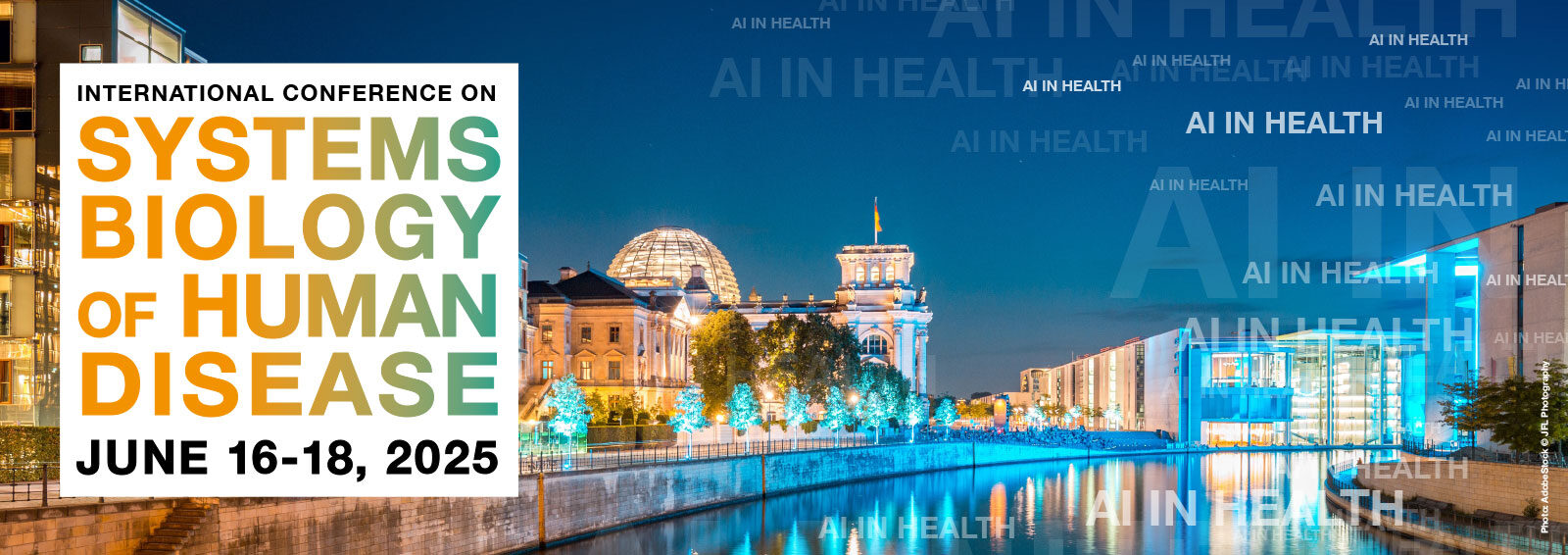
SBHD 2025

The Digital Health Center once again organises the INTERNATIONAL CONFERENCE ON SYSTEMS BIOLOGY OF HUMAN DISEASE – SBHD 2025 in Berlin from June 16-18. Don’t miss this opportunity to participate in a


SBHD 2024

Our colleagues at Vanderbilt University organise the 16th INTERNATIONAL CONFERENCE ON SYSTEMS BIOLOGY OF HUMAN DISEASE – SBHD 2024 this year from June 10-12. Don’t miss the opportunity to participate