





Like from the latin word intellegere = recognize, we would like to recognize from imaging how molecular biology in cells is unfolded. To interrogate genomic expression, single cell sequencing is currently the action of choice, while for 3D fluorescence, novel light sheet microscopy offers unprecedent imaging speed at lowest phototoxicity. We use these technologies in conjunction to explore the phenotype-genotype domain space and ultimately model different gene expression of patient organoids by imaging only. To correlate these big data matrices, deep learning classification became indispensable and finally drive our understanding in different aspects of therapy research and precision medicine at the Charité/ BIH. For details see https://iimaging.org/

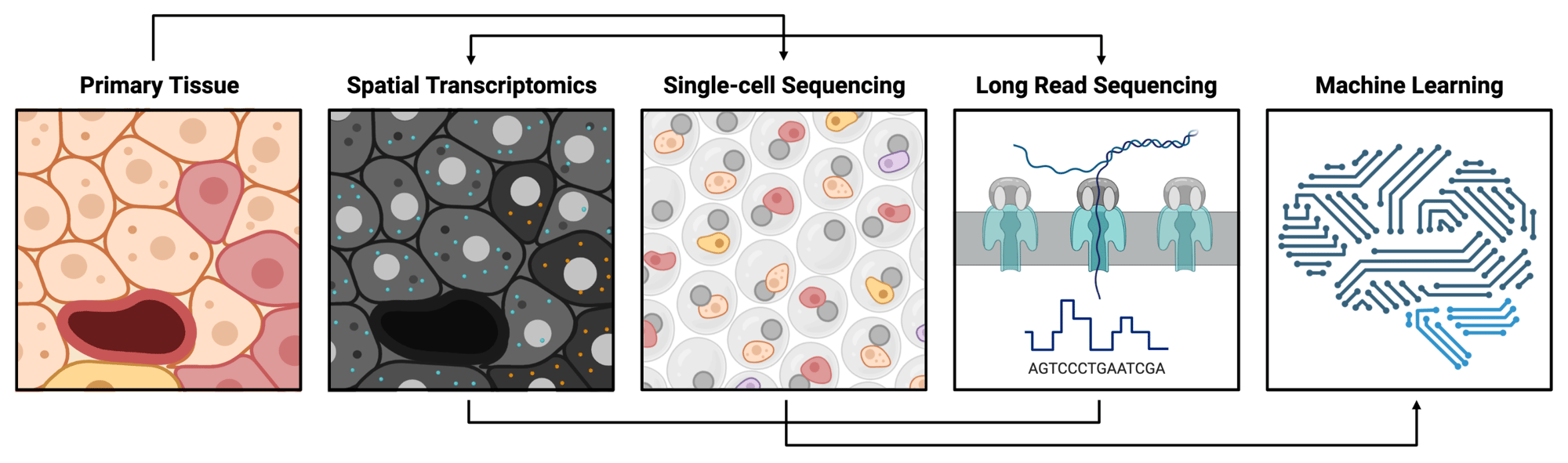
Recent technological advances have driven a rapid expansion of molecular profiling techniques that preserve the spatial relationships between cells within tissues. Depending on the sample and question at hand, we employ NGS-based or imaging-based spatial transcriptomic approaches, enabling us to study gene expression in its native tissue context.
Improvements in nanopore chemistry have made it possible to sequence DNA stretches spanning several megabases with greater accuracy and throughput. This brings previously inaccessible structural variants within reach, complementing short-read approaches and expanding the scope of genomic variation that can be studied in the context of disease.
The field of functional genomics was transformed in the last decade by the advent of single-cell sequencing. The technology and its many modalities allow the investigation of the transcriptome and epigenome at cellular resolution, revealing the heterogeneity within patient-derived tissues that bulk measurements obscure. Our group routinely applies single-cell sequencing to characterize the molecular and cellular underpinnings of a range of diseases.
Machine learning has become an indispensable component of modern bioinformatics, particularly for the analysis of the rich and complex datasets generated by single-cell sequencing and spatial transcriptomics. By training algorithms to learn from data and identify relationships within high-dimensional feature spaces, we are able to enhance our analyses across multiple levels: from cell type identification and gene regulatory network inference to the integration of imaging and molecular data for disease characterization and biomarker discovery.
Christian Conrad graduated in Biology at the University Freiburg and received his PhD in Bioinformatics at the University Heidelberg. In 2018, he moved to the Charité/BIH where he was appointed as Professor for Intelligent Imaging.
Prof. Dr. Christian Conrad
Group leader Intelligent Imaging
Charité - Campus Charité Mitte | Charitéplatz 1 | 10117 Berlin | Germany
Transcriptomic signatures of IPF in ALI-cultured airway cells and their therapeutic implications.
Chua RL, Veith C, Schneider MA, Jechow K, Kaufhold G, et al.
Thorax. 2026 February 18; 0:1-12.
Original publication PMID:41713905
resVAE ensemble: Unsupervised identification of gene sets in multi-modal single-cell sequencing data using deep ensembles.
Ten F, Yuan D, Jabareen N, Phua Y, Eils R, Lukassen S, and Conrad C.
Front. Cell Dev. Biol. 2023 February 15; 11, 2023.
Original publication PMID: 36875765
Single-Nucleus and In Situ RNA-Sequencing Reveal Cell Topographies in the Human Pancreas.
Tosti L, Hang Y, Debnath O, Tiesmeyer S, Trefzer T, Steiger K, Ten FW, Lukassen S, Ballke S, Kühl AA, Spieckermann S, Bottino R, Ishaque N, Weichert W, Kim SK, Eils R, and Conrad C.
Gastroenterology. 2021 Mar;160(4):1330-1344.e11.
Original publication PMID: 33212097
COVID-19 severity correlates with airway epithelium-immune cell interactions identified by single-cell analysis.
Chua RL, Lukassen S, Trump S, Hennig BP, Wendisch D, Pott F, Debnath O, Thürmann L et al.
Nat Biotechnol. 2020 Aug;38(8):970-979.
Original publication PMID: 32591762
Katharina Jechow
Staff scientist
katharina.jechow@charite.de
Robert Lorenz Chua
Doctoral student
robert-lorenz.chua@charite.de
Timo Trefzer
Doctoral student
timo.trefzer@charite.de
Dr. Sören Lukassen
Postdoc
soeren.lukassen@charite.de
Foo Wei Ten
Doctoral student
foo-wei.ten@charite.de
Dr. Christian Conrad
Group leader
christian.conrad@bihealth.de
Dr. Luca Tosti
Postdoc
luca.tosti@charite.de
Dr. Teresa Gabriela Krieger
Postdoc
teresa.krieger@charite.de
Dr. Li-Ling
Postdoc
l.yang@dkfz-heidelberg.de
Adrian Huck
Student
adrian.huck@charite.de
Johannes Liebig
Doctoral student
johannes.liebig@charite.de
Alexander Sudy
Doctoral student
alexander.sudy@charite.de
Dr. Agata Rakszewska
Postdoc
agata.rakszweska@charite.de
Lukas Adam
Student
lukas.adam@charite.de
As part of the de.KCD/de.NBI network the Center of Digital Health organizes this year’s de.KCD Industry Forum on June 18, 2026 at the Einstein Center Digital Future in Berlin. de.KCD creates a forum
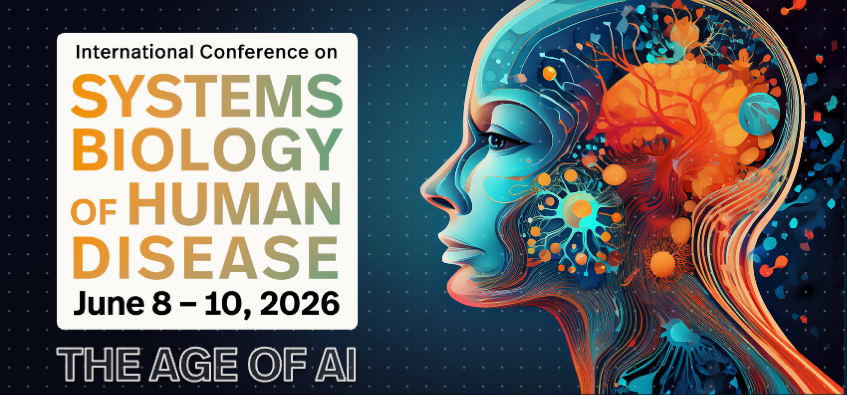
Our colleagues from Northestern University in Boston are organising the 18th INTERNATIONAL CONFERENCE ON SYSTEMS BIOLOGY OF HUMAN DISEASE – SBHD 2026 in Boston from June 08-10. This years Conference

The Berlin Institute of Health at Charité (BIH) coordinates the pan-European research initiative "EU-CiP" (European Cancer Information Portal). Supported by 12 million euros from the EU’s Horizon
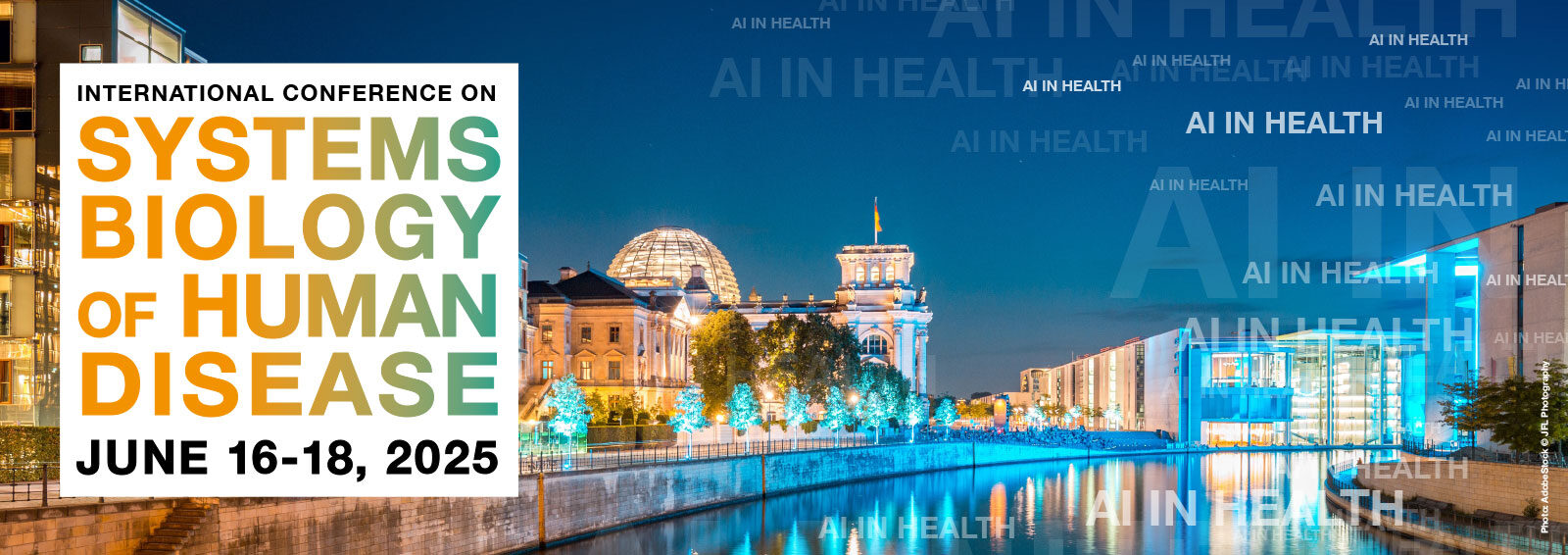
The Digital Health Center once again organises the INTERNATIONAL CONFERENCE ON SYSTEMS BIOLOGY OF HUMAN DISEASE – SBHD 2025 in Berlin from June 16-18. Don’t miss this opportunity to participate in a

The Hub for Innovations in Digital Health (HiDiH) brings together two independent sites of excellent research and development in Berlin and in Heidelberg. HIDIH’s major branch in Berlin is the Center for Digital Health at the Charité and the Berlin Institute of Health (BIH).
If we caught your attention, you are interested in our work and would like to get in touch with us, please contact us via franziska.mueller@bih-charite.de